
Presents
Quantom Psychology
Free Zoom Event:
6 pm PST, Thursday, May 21st

Integrating Chaos Theory (Without Overcomplicating It)
Small Changes → Large Effects Over Time
Chaos Theory highlights how small shifts in thought, perception, or behavior can lead to significant changes over time. In personal development, this reflects how subtle internal changes may reshape patterns, relationships, and life direction.
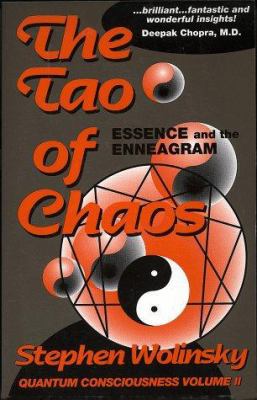
Drawing from Stephen Wolinsky’s work, this approach explores how the mind constructs patterns to create a sense of control—and how stepping beyond those patterns can open space for clarity, adaptability, and deeper awareness.
About the Presentation
This presentation introduces a reflective framework grounded in Quantum Psychology and principles inspired by Chaos Theory. Rather than adding new beliefs or techniques, it focuses on examining how perception, identity, and thought patterns shape experience.
Drawing from the work of Stephen Wolinsky, the emphasis is on recognizing and dissolving the mental structures that create unnecessary complexity. The aim is not to construct a new system of thinking—but to see clearly how existing patterns operate, and how awareness itself can loosen their hold.
Clarity is not achieved through effort or control, but through understanding how experience is formed.
What You’ll Learn
The Observer and the Construction of Experience
Explore how perception functions as an active process rather than a passive one. Learn how identity, belief systems, and internal narratives shape what we experience as “reality,” and how observing these structures creates space for change.
Patterns, Conditioning, and Mental Structure
Understand how the mind organizes experience into repeating patterns. These patterns create a sense of continuity and control—but can also reinforce limitation. This section focuses on recognizing and disengaging from automatic mental loops.
How Mental Effort Reinforces Complexity
Examine how excessive control, analysis, and striving can intensify the very patterns they attempt to resolve. Learn to identify where effort becomes counterproductive, and how stepping out of these cycles allows for greater clarity and stability.
Practical Methods for Cognitive Clarity
Develop grounded approaches that support:
- Awareness of thought without over-identification
- Reduction of unnecessary mental noise
- Recognition of identity as a constructed process
- Stability in the presence of uncertainty
These methods emphasize observation and simplicity over technique accumulation.
Why This Presentation Matters
Modern culture often reinforces constant mental activity, control, and the need for certainty. This approach offers an alternative: understanding how experience is constructed, and how reducing unnecessary complexity can lead to greater clarity.
This is not about adopting new beliefs or rejecting action—it is about recognizing how perception, thought, and identity interact, and how small shifts in awareness can lead to meaningful change over time.
Who This Presentation Is For
Individuals experiencing cognitive overload or repetitive thought patterns
Practitioners interested in awareness-based frameworks without heavy ideology
Professionals and leaders seeking clarity, adaptability, and non-reactive decision-making
Those exploring the intersection of perception, identity, and behavioral chang
We are here to support your journey.
NOTE: Your privacy and safety are our priority. We honor your inbox as a sacred space and will never share your details. We never use your information for anything other than new events and free offers, sent sparingly.
Text or Call (415)577-4511